
We get asked about synthetic lawn turf more than you might expect. And honestly, that makes sense. If you’ve spent a Georgia summer fighting brown patches, dragging hoses around the yard, or watching your grass go dormant in the July heat, the idea of a lawn that just looks green year-round sounds pretty appealing.
So let’s talk about it the way we would if you called us up and asked directly. Is synthetic turf lawn the right move for your property? Here’s our honest take.
What Synthetic Lawn Turf Actually Is
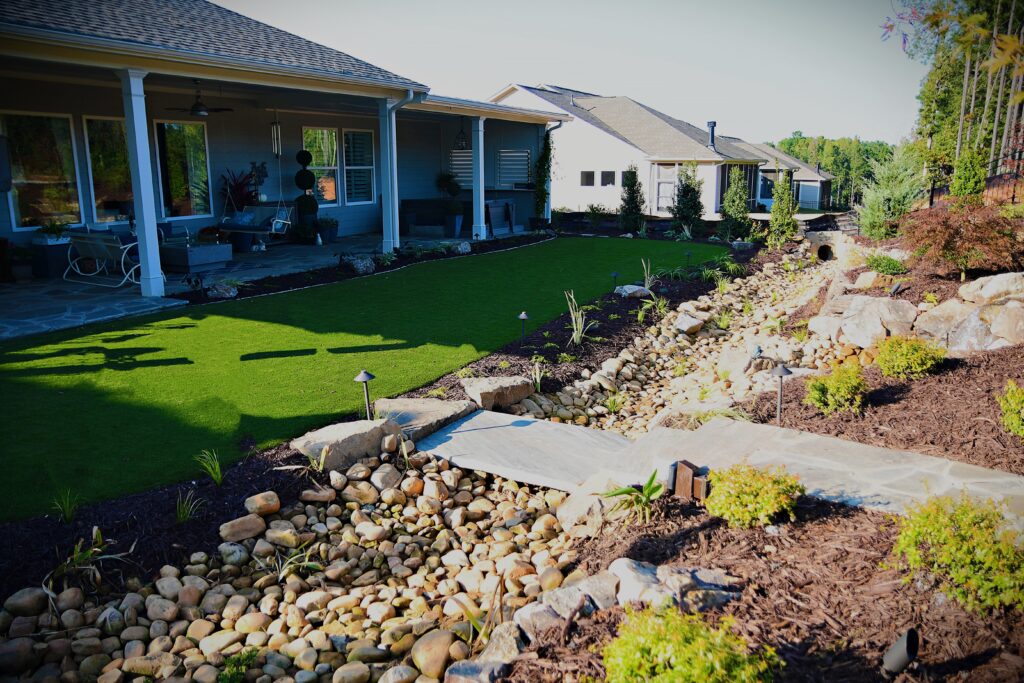
Synthetic lawn turf has come a long way from the flat, plastic-looking carpet you might picture from older sports fields. Today’s residential turf products mimic the look and texture of real grass pretty convincingly. Manufacturers build them from polyethylene or nylon fibers, install them over a base layer that handles drainage, and engineer them to hold up under foot traffic, pet use, and weather exposure for years at a time.
For homeowners in the Marietta area and across North Atlanta, the appeal usually comes down to a few things: cutting out the weekly mowing, reducing water bills, and getting a yard that looks consistent regardless of rainfall or drought conditions.
The Real Pros of Synthetic Turf Lawn
It Eliminates Most Routine Lawn Maintenance
This is the biggest selling point, and it’s a real one. With synthetic lawn turf, you’re not mowing, aerating, fertilizing, or overseeding. You’re not fighting weeds in the same way, and you’re not worrying about watering schedules during a dry stretch. For homeowners who travel frequently, have physical limitations, or simply don’t have the time to keep up with a natural lawn, that kind of relief is genuinely valuable.
It Holds Up Well in High-Traffic Areas
Natural grass in heavily used areas, think kids playing, dogs running, or a yard that doubles as an entertainment space, tends to wear down in patches. Synthetic turf handles that traffic without wearing unevenly. If you have specific zones in your yard that never seem to stay green no matter what you do, synthetic turf in those areas can be a smart targeted solution.
Water Savings Are Significant
Georgia summers can put real pressure on water usage. A natural lawn in this climate needs consistent irrigation to stay healthy, especially during dry stretches in July and August. Synthetic lawn turf requires no irrigation at all beyond an occasional rinse to clear debris or pet waste. Over time, those water savings add up.
The Honest Cons You Should Know
The Upfront Cost Is Substantial
Synthetic turf lawn installation is not cheap. Depending on the size of the area, the quality of the product, and the complexity of the installation, you’re typically looking at a significant upfront investment compared to natural sod. The payoff comes over time through reduced maintenance and water costs, but the initial price tag is something to go in with eyes open about.
It Gets Hot
This is a big one in Georgia specifically. Synthetic turf absorbs and retains heat in a way that natural grass does not. On a 95-degree Atlanta summer afternoon, the surface temperature of synthetic turf can climb well above air temperature. That makes it uncomfortable to walk on barefoot and something to think carefully about if young kids or pets spend a lot of time on it.
It Does Not Work for Every Yard
Synthetic turf is a great fit for some properties and a poor fit for others. Yards with significant slope, poor drainage underneath, or large tree canopies that drop debris constantly require more thought before installing. Getting the base layer and drainage right during installation is critical, and that is where working with an experienced landscape design and installation team really matters.
When We Think Synthetic Lawn Turf Makes Sense
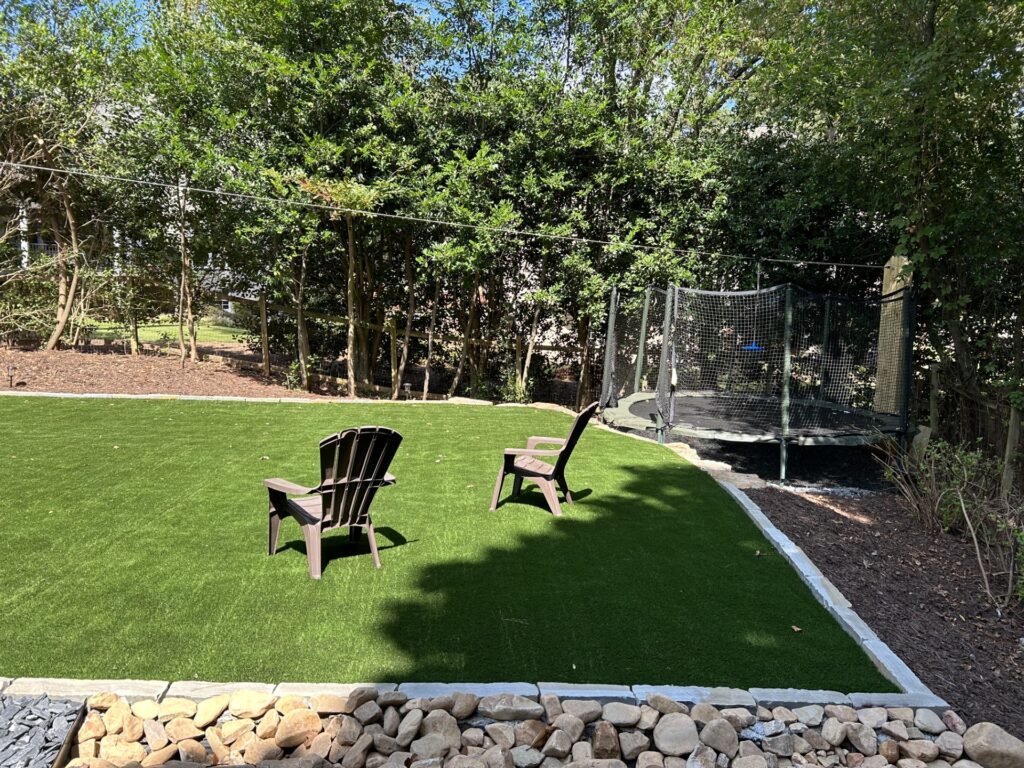
In our experience, synthetic turf is a strong option when the goal is low maintenance in a defined area rather than replacing an entire lawn. Pet runs, side yards, play areas, and small front lawn sections are all spots where synthetic turf tends to perform well and look great long term.
It also makes sense for homeowners who have genuinely struggled to grow and maintain natural grass in a specific problem area, whether that’s due to shade, soil conditions, or heavy use. Rather than fighting the same battle every season, synthetic turf gives that space a clean, finished look without the ongoing effort.
For a full lawn replacement, we usually recommend a conversation first. The right answer depends a lot on how you use your yard, your budget, and your long-term goals for the property. Our lawn maintenance services team can walk you through what makes the most sense for your specific situation.
Frequently Asked Questions About Synthetic Lawn Turf
How long does synthetic lawn turf last?
Most quality residential synthetic turf products last between 15 and 20 years with proper installation and basic care. Product quality, foot traffic volume, and the quality of the base layer installation all determine how long your turf holds up.
Does synthetic turf lawn get too hot to use in Georgia summers?
It can. Synthetic turf surfaces absorb heat and can reach temperatures well above the surrounding air on hot days. Choosing a product with heat-reduction technology and planning for shaded areas where possible helps manage this in the Georgia climate.
Is synthetic lawn turf safe for kids and pets?
Most modern residential synthetic turf products are manufactured without harmful chemicals and are considered safe for both kids and pets. Look for products that are lead-free and use non-toxic infill materials. For pet areas specifically, proper drainage underneath is important for sanitation.
How much does synthetic turf lawn installation cost?
Costs vary based on the size of the area, the turf product selected, and the complexity of the installation including base preparation and drainage. Getting a professional assessment before budgeting is the best approach, as the base layer work is just as important as the turf itself.
Does synthetic lawn turf require any maintenance at all?
It is low maintenance, not zero maintenance. You will occasionally need to rinse the surface, remove debris like leaves and twigs, and brush the fibers upright in high-traffic areas. Pet owners will need to rinse and sanitize more regularly. Compared to natural grass, the time commitment is dramatically reduced.
Can synthetic turf be installed in a shaded yard?
Yes, and this is actually one of its advantages. Natural grass often struggles in heavily shaded areas, but synthetic turf performs consistently regardless of sun exposure. If you have areas under large trees where grass never seems to grow, synthetic turf can be a practical solution.
Thinking About Synthetic Lawn Turf for Your Property?
If you’re weighing whether synthetic lawn turf is the right fit for your yard, we’re happy to talk it through with you. P.O.P.S. Landscaping has been helping homeowners across Marietta, East Cobb, Woodstock, Kennesaw, Canton, and the surrounding North Atlanta area create outdoor spaces they actually enjoy for over 30 years. Whether you’re leaning toward synthetic turf, exploring natural lawn options, or just trying to figure out why your yard keeps giving you trouble every summer, we can help you find the right path forward. Contact us today to schedule a consultation.
